Entrelinha
Year
2025
TYPE
Phygital
SCOPE
Experience Design
CONTEXT
Community
DURATION
4 months
OVERVIEW
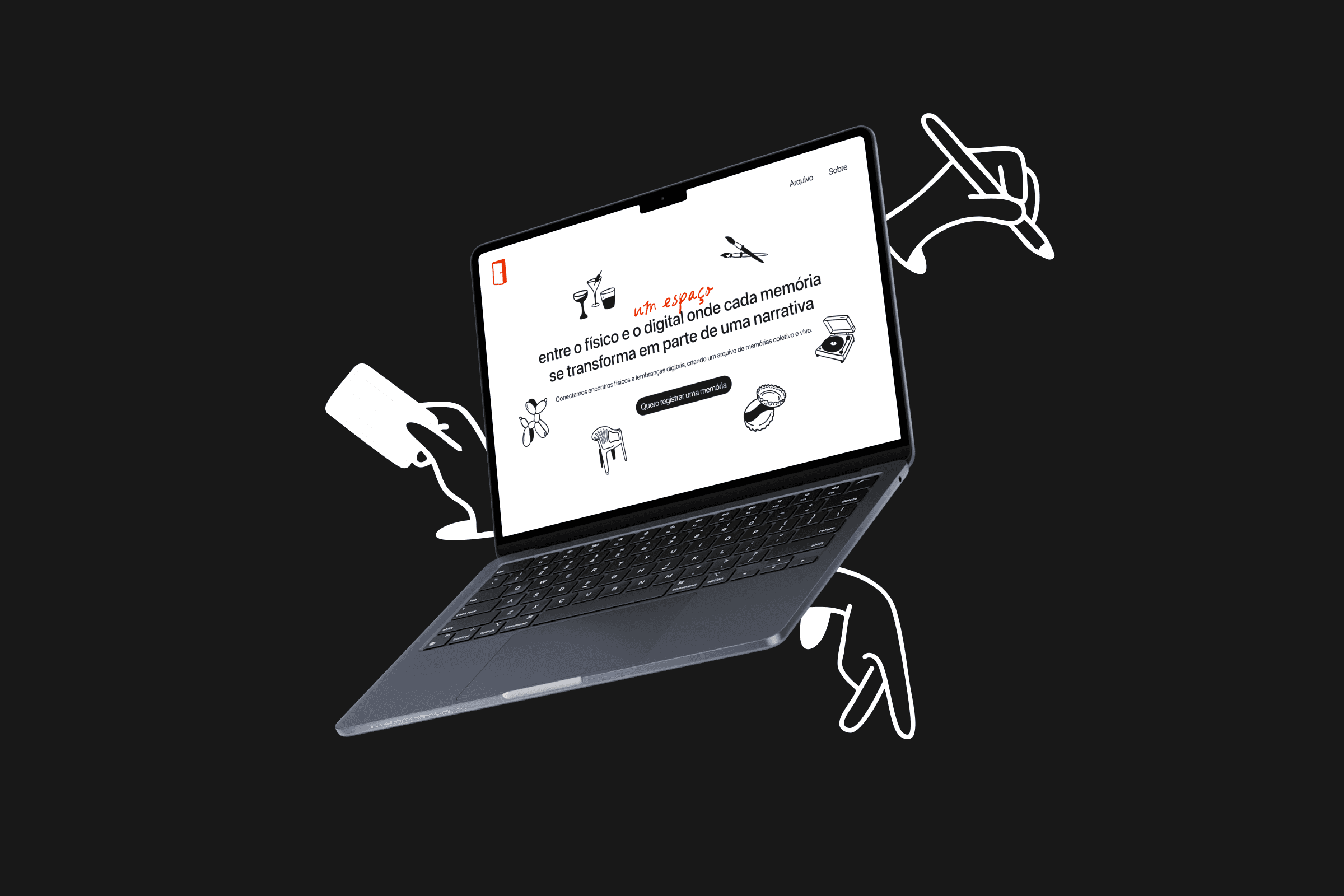
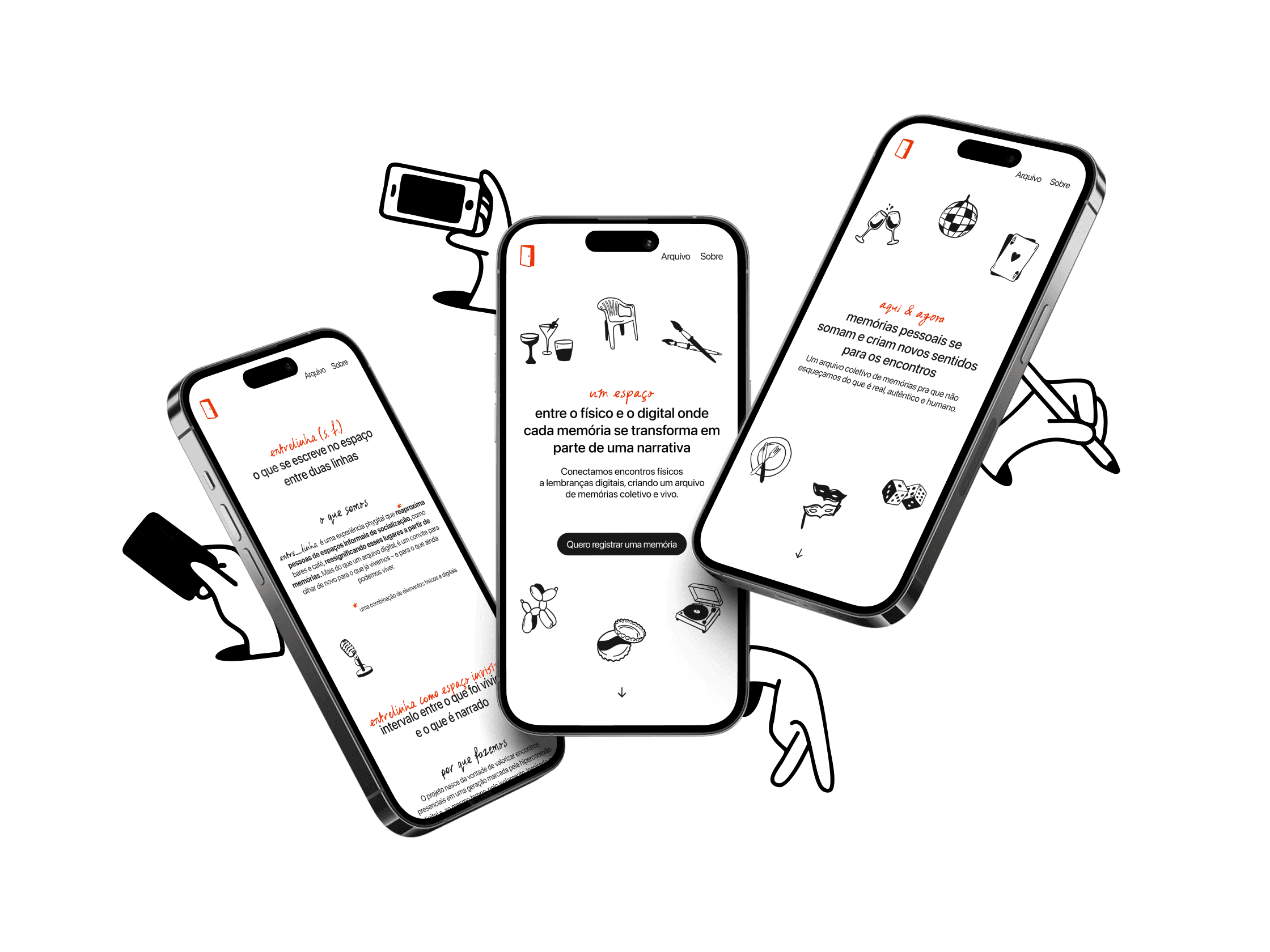
Entrelinha is a phygital platform that reconnects people with local third places through a collective archive of shared memories.
CHALLENGE
Contemporary social life has shifted toward digital convenience. While online platforms enable constant communication, they often replace – rather than complement – physical presence. At the same time, third places such as small pubs and cafés, historically essential for informal social bonding, are gradually losing frequency and relevance in younger generations’ routines.
The challenge was to design a system capable of reconnecting people with these spaces – not through functional information like price or location, but through memory. How might collective nostalgia and emotional storytelling encourage people to intentionally return to local third places, while integrating digital behavior instead of fighting it?
PROCESS
Grounded in Ray Oldenburg’s Third Place theory and contemporary loneliness data, the project explored the relationship between time, memory, and space as a strategic design lens.
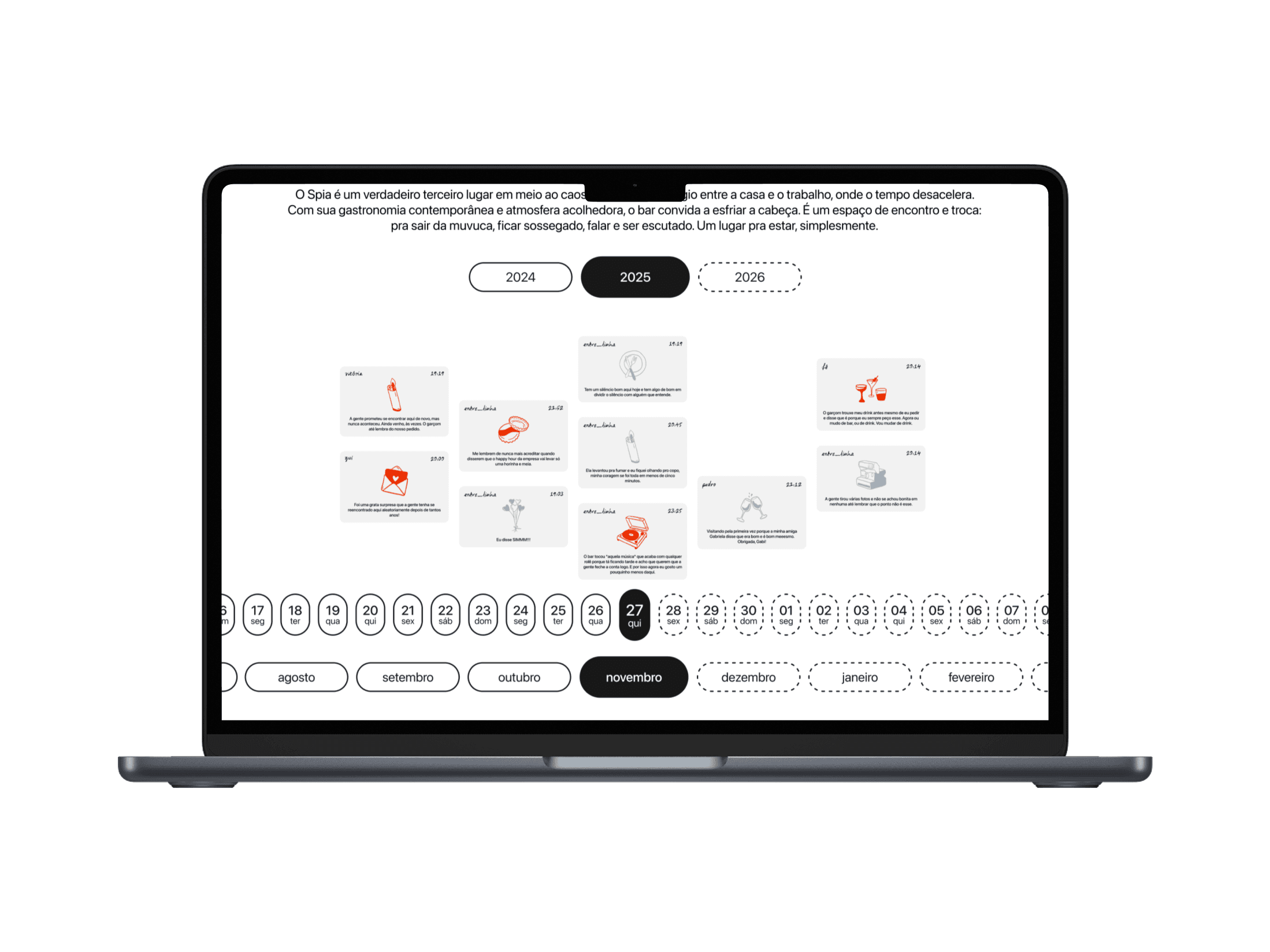
Designed a location-based digital archive where memories are anchored to specific places and organized chronologically, reinforcing the idea of spatially layered narratives.
Integrated printed artifacts (coasters, collectible cards, physical kits) with web navigation, mobile memory registration, and an AR-triggered personal memory scene.
Developed a warm yet minimal visual identity that balances editorial typography with playful illustration, reflecting social warmth without losing structural clarity.
SOLUTION
Entrelinha operates as a location-based memory archive accessible through printed QR codes distributed in participating third places. Upon arrival, visitors encounter physical touchpoints that introduce the project and guide them to the digital platform, where they can explore existing memories tied to that specific venue.
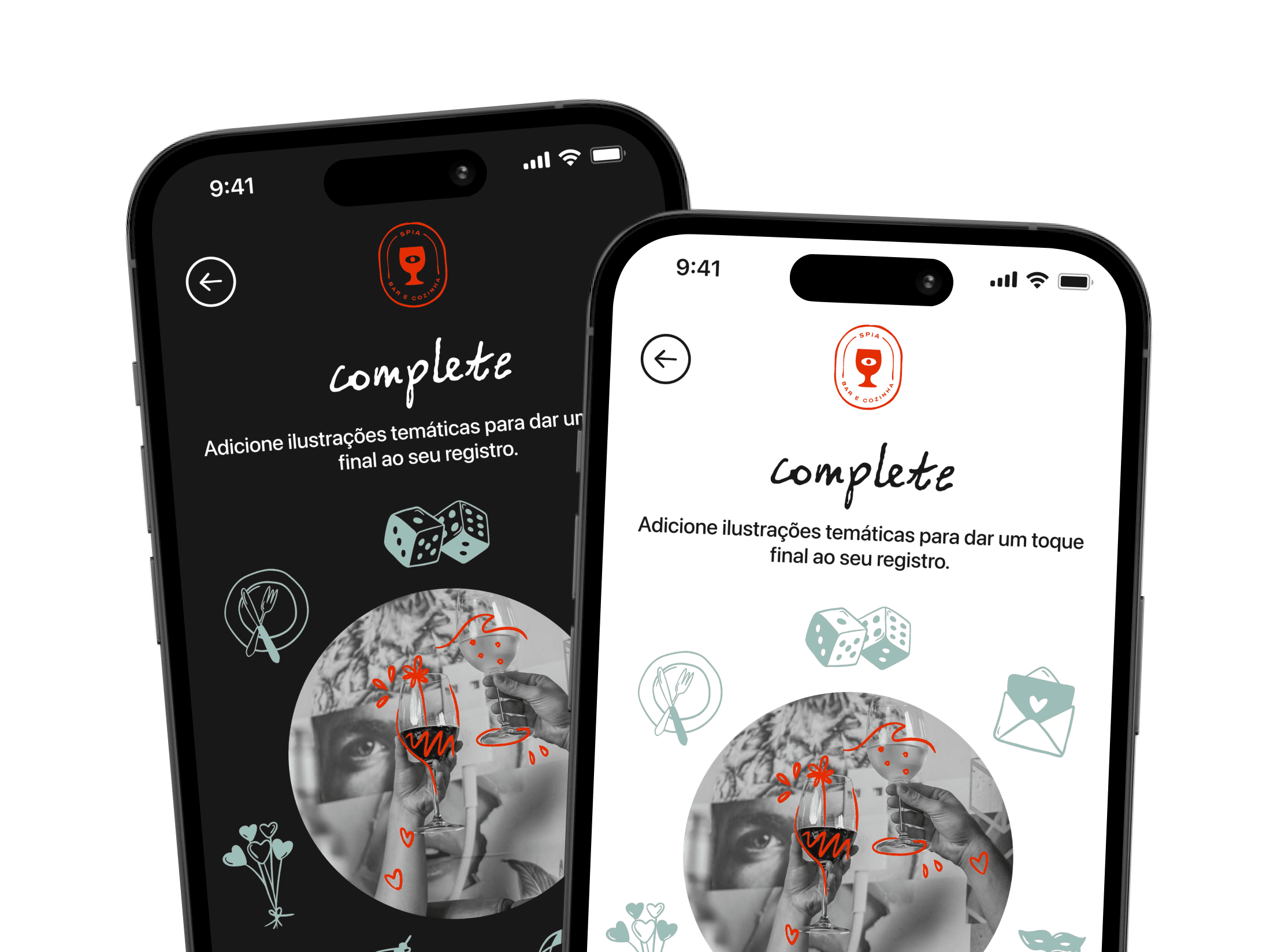
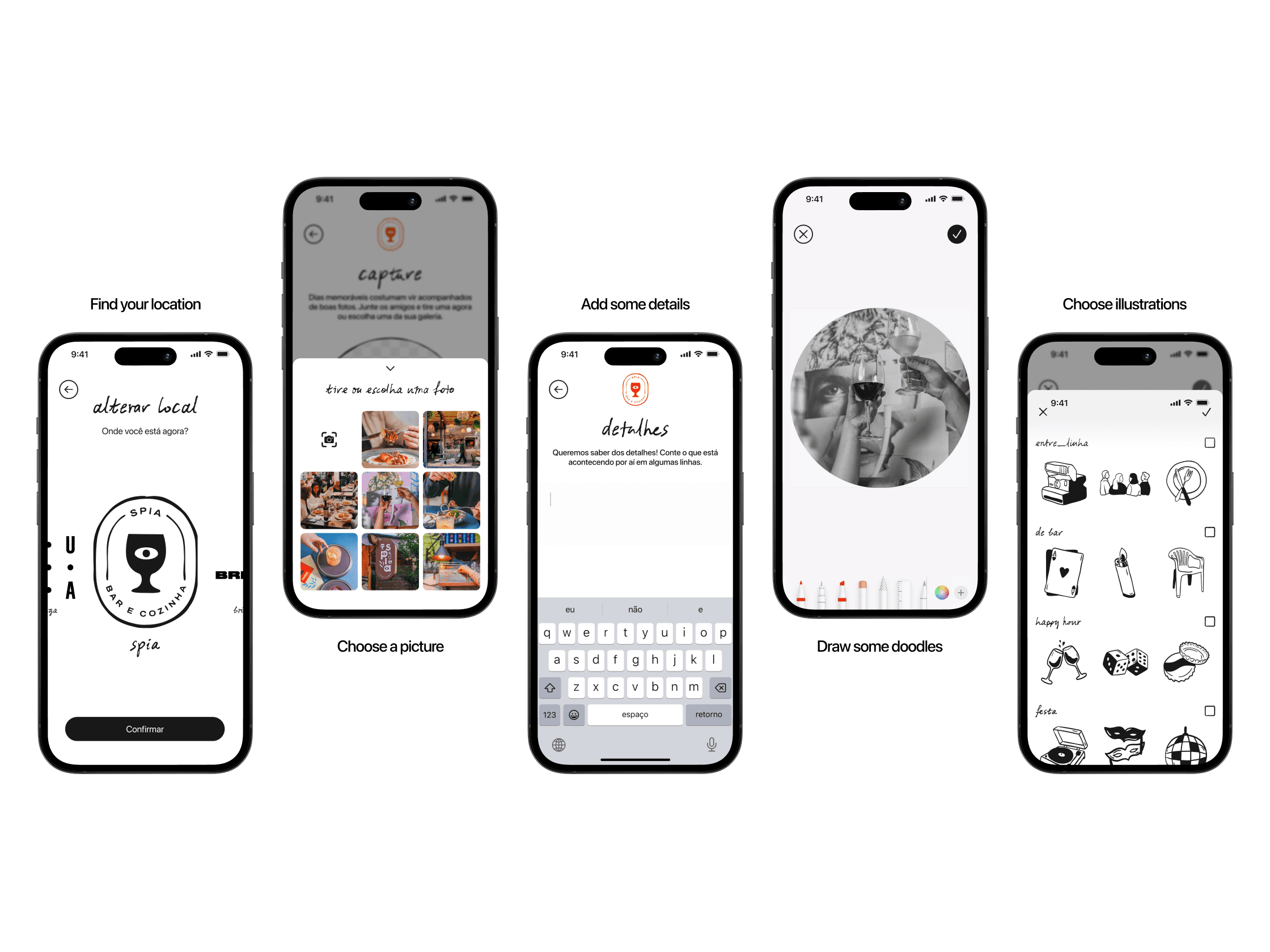
The core interaction happens in the mobile flow: users register a memory in real time by selecting the location, adding an image and short narrative, customizing it with illustrations, and publishing it into the collective archive. Each entry becomes part of a growing, place-based timeline visible to future visitors.
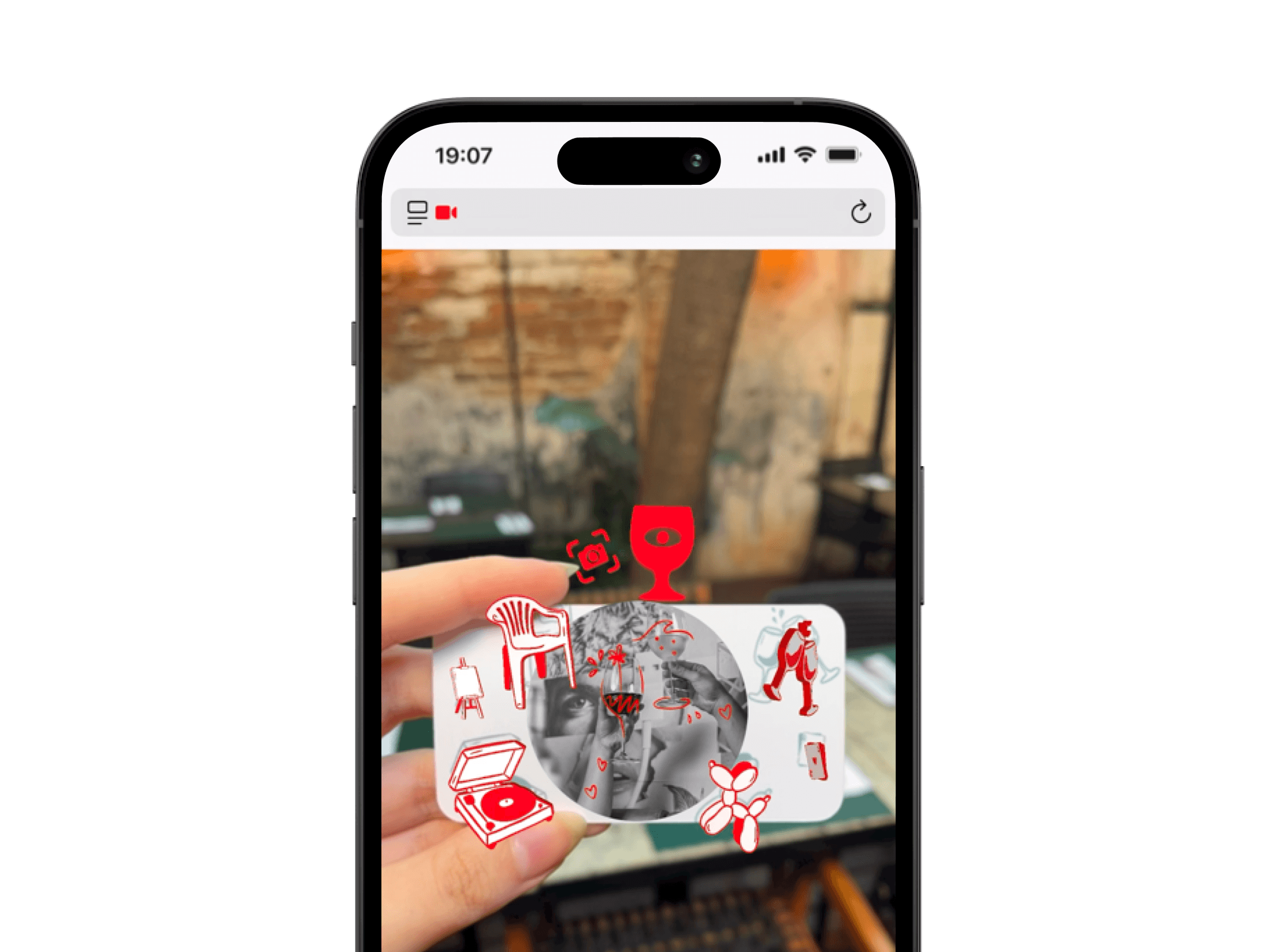
The experience concludes with a physical collectible kit containing a personalized AR card. By scanning the card later, users access an augmented reality scene anchored to their memory, merging physical souvenir and digital narrative into a single layered experience.

IMPACT
Although not publicly launched, Entrelinha was presented to the owner of Spia – the third place used as the primary case study and research base for the project. His response highlighted the relevance of initiatives that strengthen community bonds and support local businesses, especially during a period of declining in-person attendance.
The project demonstrates how design can operate beyond interface creation, proposing a systemic approach that connects digital habits with physical presence. Developed as my final undergraduate thesis in Design and awarded highest academic distinction, Entrelinha consolidates research, strategy, and execution into a cohesive phygital experience model.